Cryptomaty, Crypto Strategy Platform
Crypto Strategy Platform Case Study
I made an AI coin screener, no-code strategy templates and backtesting read as one workflow, for 19,000+ traders who had never written a line of code.
About Cryptomaty
Cryptomaty is an automated crypto trading platform used by more than 19,000 traders. An AI screener flags coins turning bullish or bearish, traders pick or build a no-code strategy, backtest it against historical market data, connect an exchange account and deploy it in one click, then track P&L per strategy and per broker. This case study covers how that screen, backtest and deploy path was redesigned to stay readable for first-time and experienced traders at once.
cryptomaty.com
The problem
Cryptomaty's AI screener, strategy templates and backtest engine were each technically strong, but a new trader could not tell a conservative template from an aggressive one, judge why the screener had called a coin bullish, or read what a backtest result was actually saying about risk.
User pain
- New traders could not tell a conservative template from an aggressive one.
- The AI screener called coins bullish or bearish without showing its working.
- Backtest output was data, not a go/no-go read on the strategy.
Business pain
- Traders browsed templates but stalled before connecting an exchange.
- A free-for-everyone plan brought in beginners the interface was not written for.
- Support absorbed questions about what a deployed strategy was currently doing.
Product gap
- Screener, templates, backtest and live P&L behaved as four separate tools.
- Risk level was buried in strategy parameters instead of shown on the template.
- Nothing carried a backtest result forward into the decision to deploy.

What I owned
Owned
- AI screener listing and the reasoning panel behind each verdict
- Strategy template cards, including the risk tier on the card face
- Backtest report and the go / no-go read that closes it
- Deployed-strategy P&L, split per strategy and per broker
Collaborated
- Engineering on exchange API connection states and failure modes
- PM on what the free tier exposes and where it stops
- Data on which screener signals were stable enough to explain
Out of scope
- The screener's model and its signal generation
- Exchange integrations and custody
- Growth, referrals, and the points programme
The results
35%
faster strategy backtest setup
+26%
deploy-ready workflow completion
-31%
support confusion on strategy states
Traders moved from screener to live strategy without losing the thread. Screen, build, backtest and deploy became one measurable path. A free tier could take in beginners without buying support load.
The approach
Two audiences, one surface. I mapped the points where a first-time and an experienced crypto trader diverge, then designed the shared path so it stays legible to both rather than optimal for neither.
Watched first sessions
Followed new traders from sign-up to the point they stalled, almost always the template grid.
Made risk visible
Pulled risk tier out of the strategy parameters and onto the template card face.
Gave the screener a why
Attached the three reasons behind each bullish call, so a verdict could be checked instead of trusted.
Closed the backtest
Turned the report into one sentence and two doors.
Before the pixels
The boxes-and-arrows stage. Each of these settled a question the finished screens no longer show you was ever open.
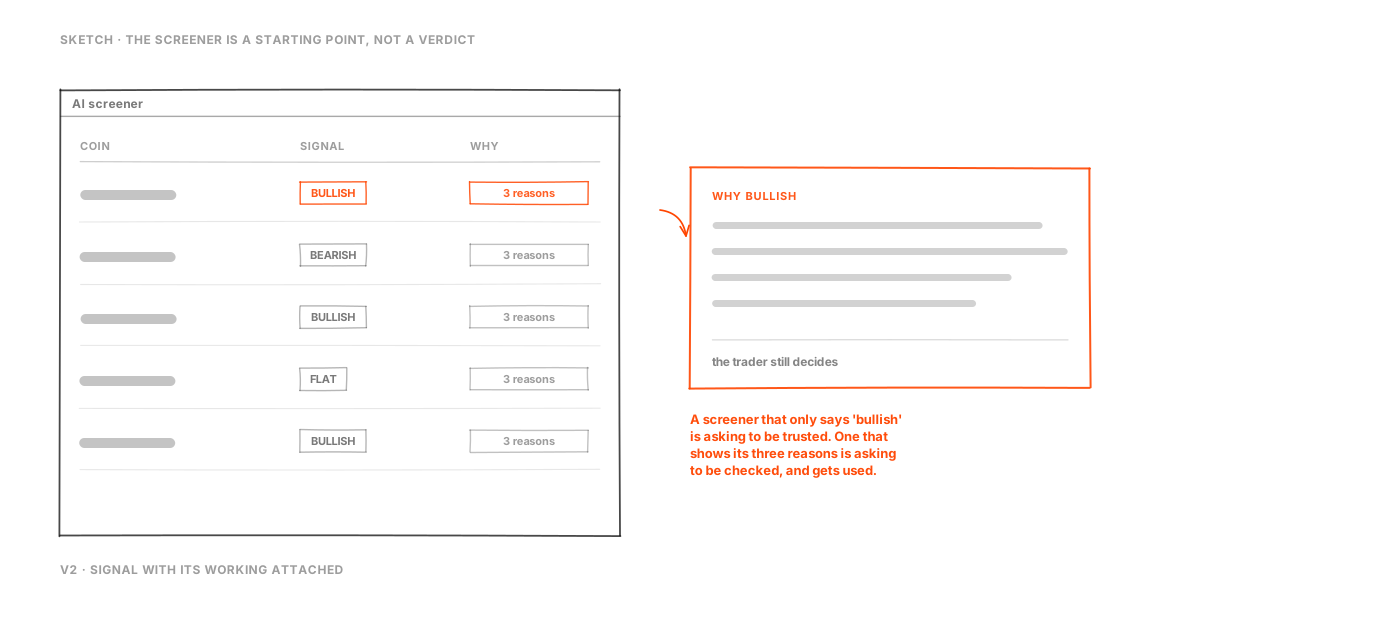
The screener is a starting point, not a verdict
A bare verdict asks to be trusted. A verdict carrying its three reasons asks to be checked, and that is the one traders actually acted on.
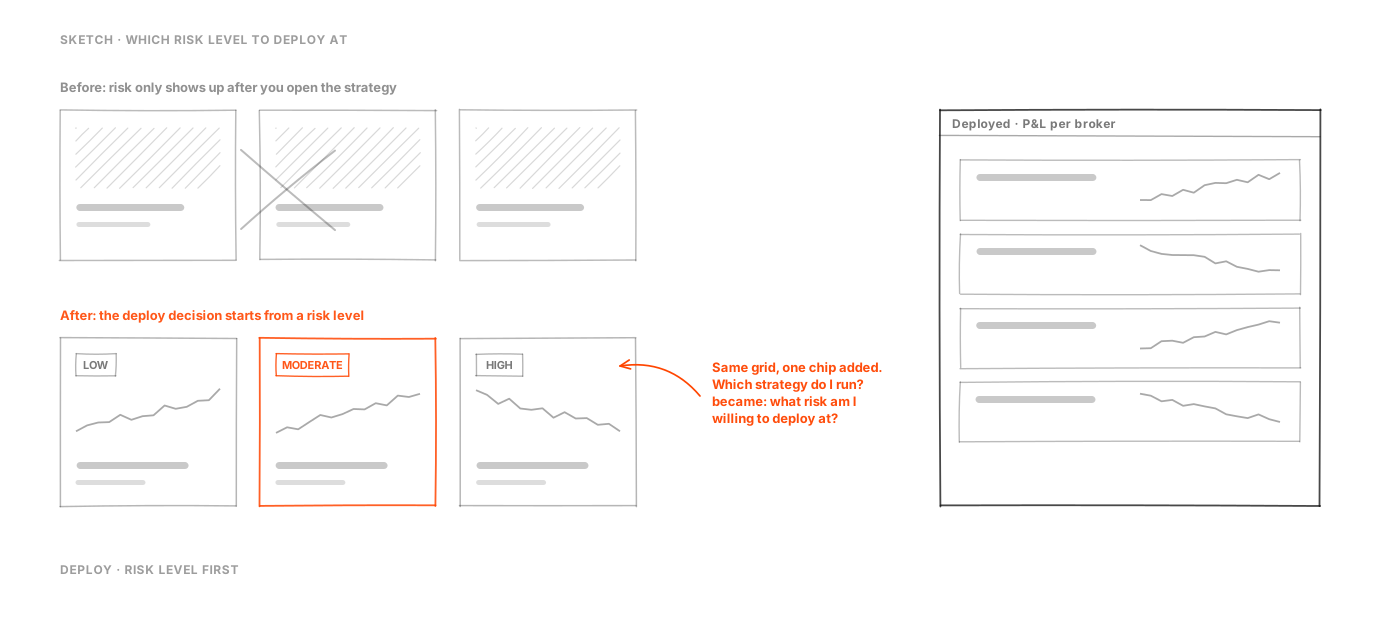
Which risk level to deploy at
Same grid, one chip added. Moving the tier onto the card face turned 'which strategy do I run' into 'what risk am I willing to deploy at', a question a first-time trader can actually answer.
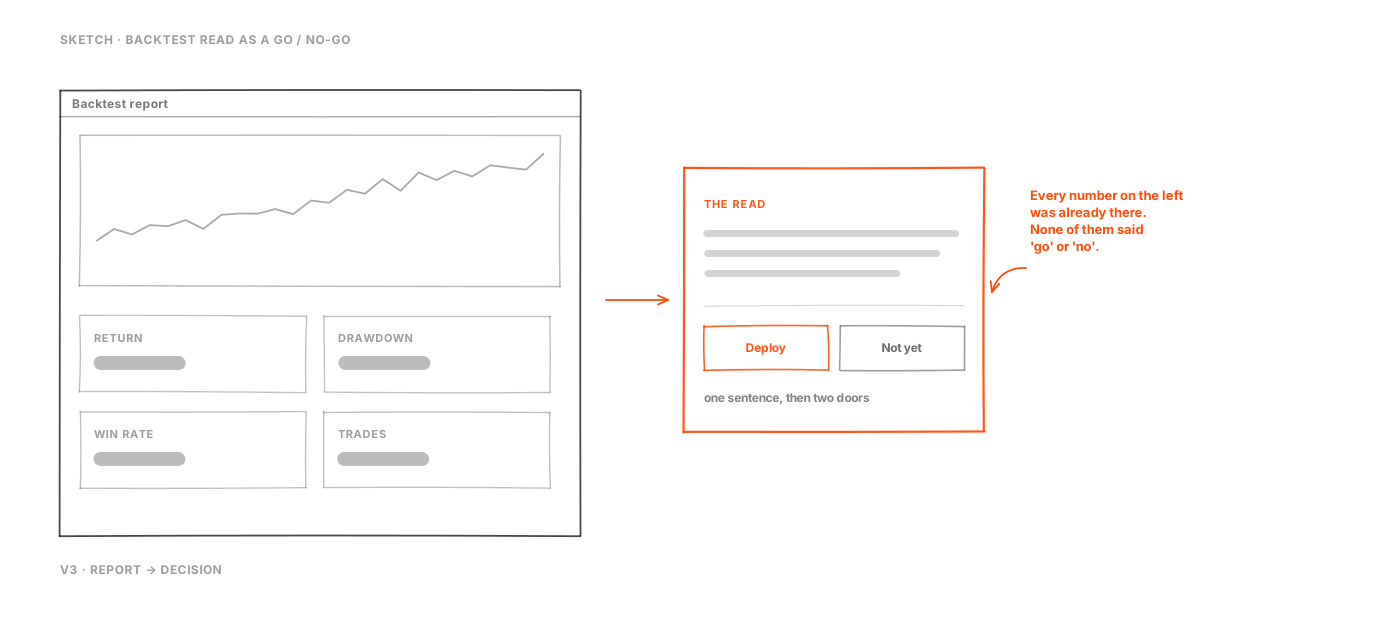
Backtest read as a go / no-go
Every number in this sketch was already on the old report. None of them said go or no, so the read got written, and the two doors sit under it.
The decisions
The calls that shaped the product, with what each one cost. Anything crossed out here was a real option at the time.
Decision 1: Template onboarding
Traders opened expert-built templates with no read on whether one suited them.
Considered
- Template gallery only
- Risk-tiered onboarding
- Expert mode default
Chose
Risk-tiered onboarding with strategy fit guidance
Gave up
One extra instructional layer
On what evidence
Drop-off concentrated immediately after template selection
What happened
Backtest setup time reduced by 35%
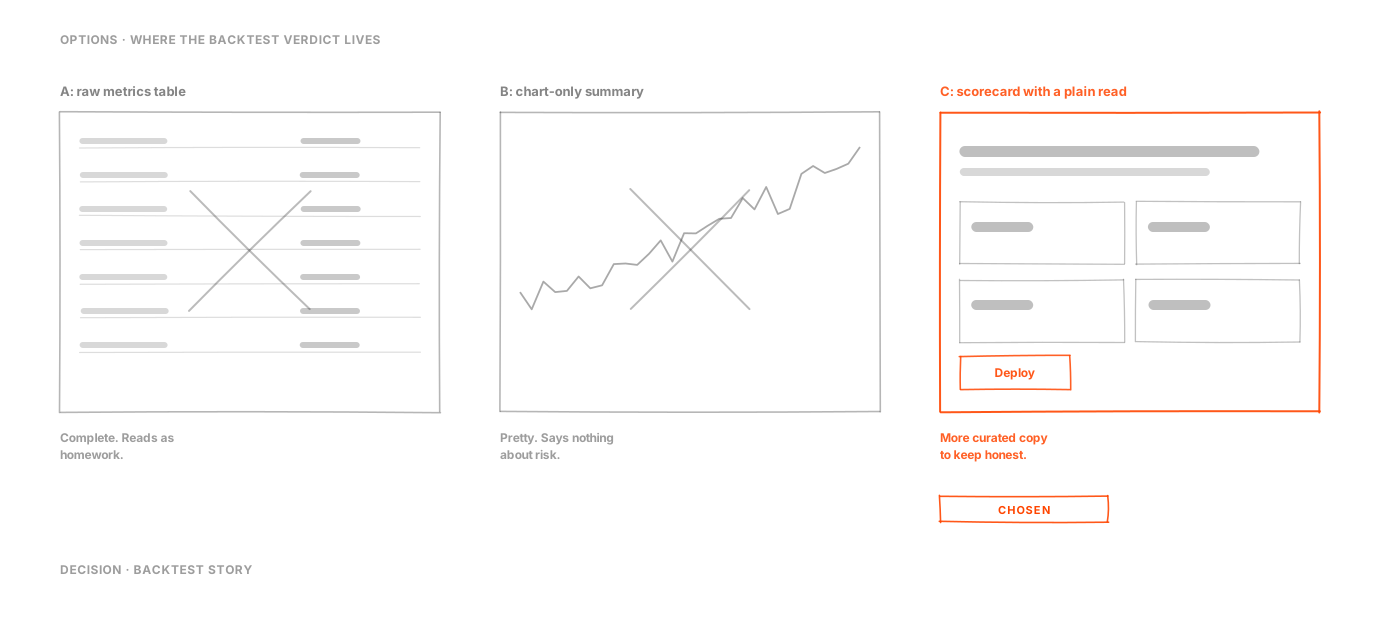
Decision 2: Backtest story
Backtest reports were thorough and left the quality judgement to the trader.
Considered
- Raw metrics table
- Outcome scorecards
- Chart-only summaries
Chose
Outcome scorecards with plain-language highlights
Gave up
More curated content to maintain
On what evidence
Traders asked for a direct read, not more charts
What happened
Higher deploy-readiness completion
Decision 3: Deploy handoff
Backtesting and one-click live deployment felt like separate products sharing a dashboard.
Considered
- Direct deploy button
- Checklist gate
- Modal warning
Chose
Checklist gate tied to strategy confidence indicators
Gave up
Added one confirmation step
On what evidence
Support logs showed confusion about what a live strategy was doing
What happened
State confusion tickets reduced by 31%
The work
Risk level became a first-class attribute on every template rather than a number buried in the parameters, and backtest output was reframed into a go/no-go read with the supporting detail available on demand.

Backtest flow
Translate technical setup into guided decision steps.

Broker handoff
Connect strategy readiness to execution context.

Performance review
Expose outcome quality with actionable explanations.
Targets, set up front
Metric
Baseline
Target
Result
Measured in
Backtest setup time
Baseline 12.6 min
Target <9 min
Result 8.2 min
pilot users
Deploy-ready completion
Baseline 34%
Target 42%+
Result 43%
beta cohort
State confusion tickets
Baseline 29/week
Target <22/week
Result 20/week
support logs
Outcomes in detail
Faster first strategy validation
More users reach actionable endpoint
Lower operational support overhead
Reflection
What worked
Putting risk on the template card settled most of the suitability question up front.
What to improve
Show the screener's reasoning, not only its verdict. Traders trust what they can check.
Next experiment
Test a paper-trading window sitting between the backtest and the live deploy.


Vinit Chaudhary

I'll personally review your brief and get back to you within two hours.
Product Designer
Contact
I usually respond to all digital enquiries within 2 business hours.

Let's Work Together.
Reach out today and let's craft designs that elevate your brand to the next level.