Investock.ai, Stock Advisory Platform
Stock Advisory Platform Case Study
I turned a SEBI-registered research desk into something an investor could act on: advisory calls, model portfolios and theme baskets in one decision surface.
About Investock.ai
Investock.ai is a SEBI-registered research analyst (INH000026150). It publishes equity and F&O advisory calls carrying entry, target and stop-loss levels alongside the research behind them, runs curated model portfolios such as India Growth, and offers diversified theme baskets, while execution stays with the investor's own broker. This case study covers the onboarding, advisory and portfolio-evaluation flows.
investock.ai
The problem
Investock.ai published advisory calls, model portfolios and theme baskets at once, and asked every new subscriber to understand all three before they could usefully act on any one of them.
User pain
- Investors were acting on unattributed tips with no entry, target or stop-loss.
- The research rationale existed but sat far from the moment of the decision.
- Nothing told a subscriber when a live call had stopped being valid.
Business pain
- High-intent subscribers dropped before reaching a first actionable call.
- SEBI registration was the real differentiator and read as a badge, not proof.
- Support absorbed questions about which plan and which basket suited whom.
Product gap
- Advisory calls, model portfolios and theme baskets shared no decision frame.
- Risk was collected at onboarding and then never used to filter what an investor saw.
- Market signals, screeners and advisory calls each produced a recommendation with no shared shape.

What I owned
Owned
- Onboarding: risk profile, plan payment, and the KYC gate ahead of advisory access
- The advisory call card: levels, rationale, and its invalidation state
- A portfolio view holding model portfolios and manually added holdings side by side
- Basket listing, basket detail, and adding a basket into the portfolio's risk mix
Collaborated
- Research desk on what a published call must carry to stay compliant
- PM on plan tiering and which surface each subscription unlocks
- Engineering on live NSE data refresh and state visibility
Out of scope
- Order execution: investors place their own trades at their own broker, outside the product
- Research methodology and the calls themselves
- Pricing of the advisory plans
The results
32%
faster sign-up to first portfolio
-27%
drop-off in onboarding
+21 pp
higher portfolio clarity score
Subscribers could act on a call without leaving the reasoning behind it. Advisory, model portfolios and baskets read as one product, not three. A regulated research desk became legible enough to sell as a subscription.
The approach
I segmented onboarding by risk profile and instrument before touching a screen, so the product could reveal only the surface a given investor had actually come for.
Sat with the calls
Read three months of published advisory calls and the questions support kept getting about them.
Split the intents
Separated long-term basket investors from F&O traders before designing a single onboarding path.
Rebuilt the call
Made entry, target, stop-loss, and rationale one object instead of four separate places.
Held risk to the end
Carried the tier picked at onboarding through every basket, portfolio and holding view.
Before the pixels
The boxes-and-arrows stage. Each of these settled a question the finished screens no longer show you was ever open.
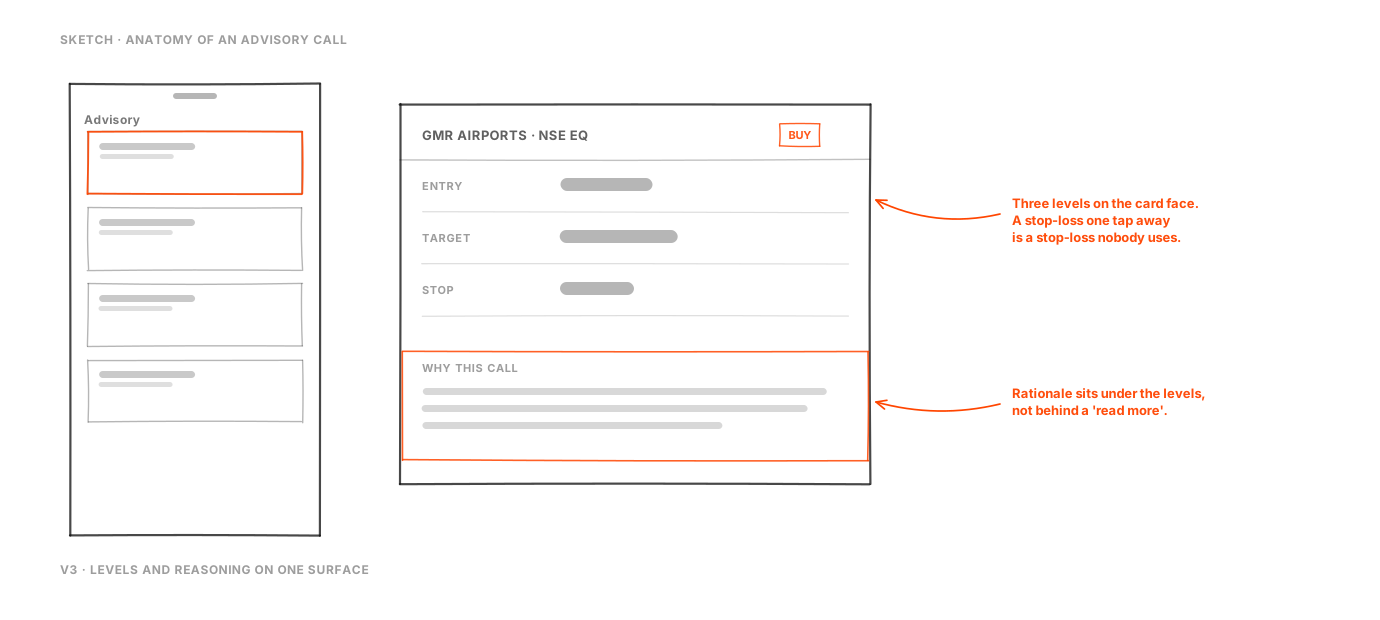
Anatomy of an advisory call
Three layouts for the same call. The one that shipped keeps entry, target, stop-loss and the reasoning on a single surface. A stop-loss one tap away is a stop-loss nobody uses.
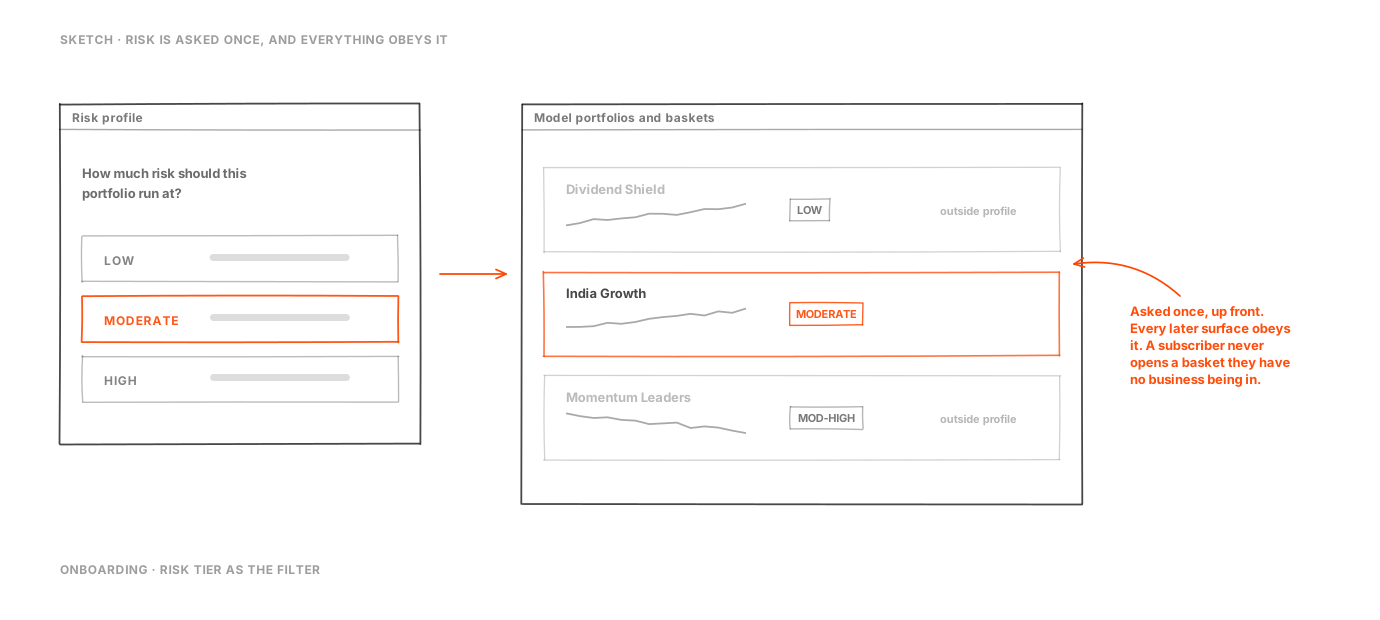
Risk is asked once, and everything obeys it
Investock asks for a risk tier during onboarding and then has to honour it. Sketching that answer as a filter, rather than adding a second suitability screen later, is what keeps a subscriber out of baskets they have no business opening.
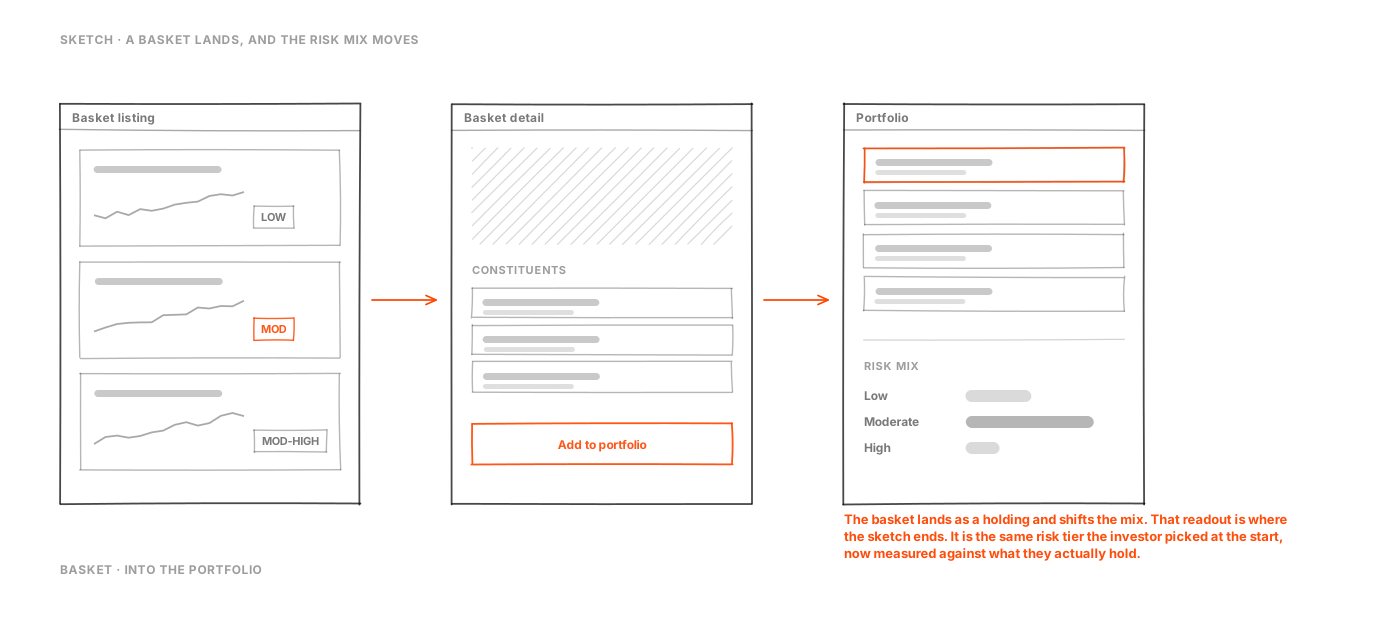
A basket lands, and the risk mix moves
Adding a basket is not a neutral act. It changes what the whole portfolio is running at. The sketch ends on that readout, measuring the tier the investor picked at the start against what they now actually hold.
The decisions
The calls that shaped the product, with what each one cost. Anything crossed out here was a real option at the time.
Decision 1: Risk-profiled onboarding
Every investor was routed the same way regardless of risk appetite or instrument.
Considered
- Single flow
- Risk-profiled branch
- Skip onboarding
Chose
Risk-profiled onboarding tied to plan and basket eligibility
Gave up
Slightly longer onboarding architecture
On what evidence
Intent split between long-term basket investors and F&O traders
What happened
Drop-off reduced to 27%
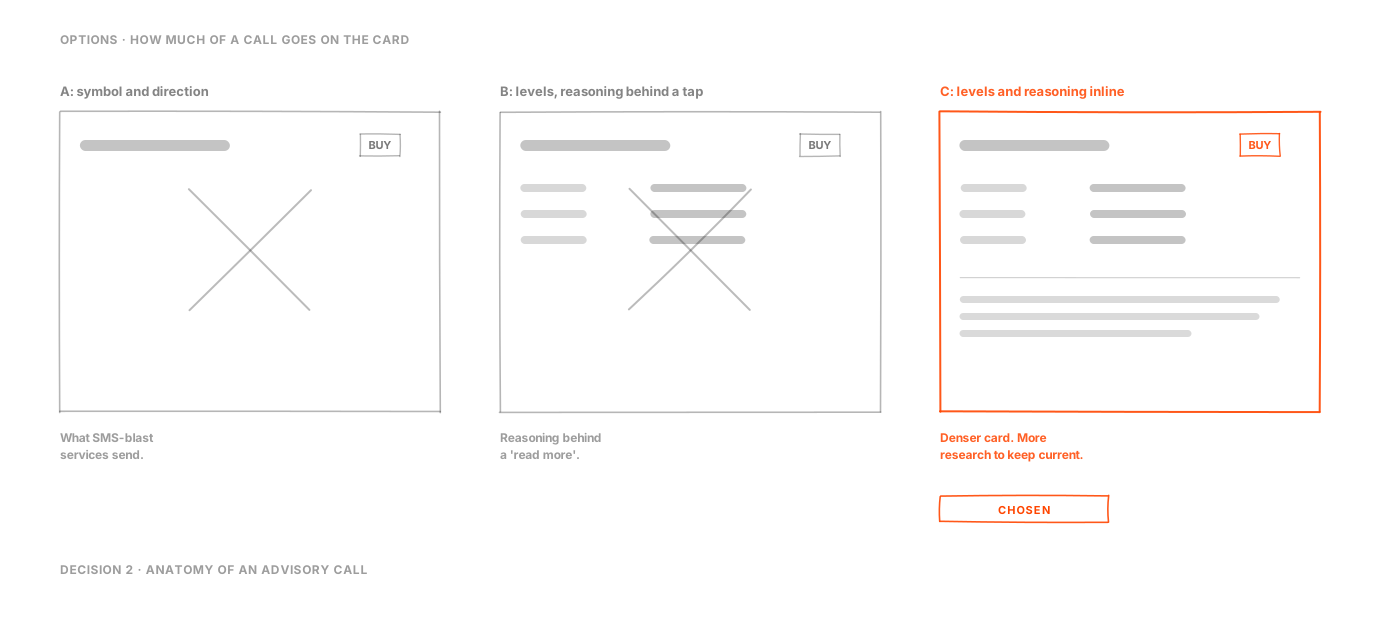
Decision 2: Anatomy of an advisory call
Calls arrived as a symbol and a direction, the way SMS-blast services send them.
Considered
- Symbol and direction only
- Call card with levels and rationale
- Research note as an attachment
Chose
Call card carrying entry, target, stop-loss and the reasoning inline
Gave up
A denser card, and more research content to keep current
On what evidence
Subscribers said they read the rationale before deciding
What happened
Sign-up to first portfolio 32% faster
Decision 3: Reading a portfolio
Model portfolio and basket pages were analytics-rich and still opaque.
Considered
- Raw analytics
- Tiered insight cards
- Report export
Chose
Tiered insight cards with plain-language summaries
Gave up
Increased content maintenance
On what evidence
Subscribers wanted an actionable summary before the deep charts
What happened
Clarity score improved by 21 points
The work
Risk-led onboarding routes each investor into a single workflow, every advisory call carries its levels and its rationale inline, and portfolio insight is expressed as a small set of interpreted signals rather than a full analytics surface handed over uninterpreted.

Advisory calls
Put entry, target and stop where the decision gets made.

Portfolio
Make holding-level outcome quality visible at a glance.

Profile and risk
Surface KYC and risk state before it blocks advisory access.

Mobile dashboard
Carry portfolio value and the day's actions into thumb reach.

Advisory on mobile
Hold the same call structure legible at phone width.
Targets, set up front
Metric
Baseline
Target
Result
Measured in
Sign-up to first live portfolio
Baseline 14.2 min
Target <10 min
Result 9.6 min
test cohort
Onboarding drop-off
Baseline 37%
Target <30%
Result 27%
beta release
Portfolio clarity score
Baseline 55%
Target 70%+
Result 76%
survey
Outcomes in detail
Faster path to product value
Improved activation quality
Stronger decision confidence
Reflection
What worked
Putting entry, target and stop-loss on the call card removed most of the guesswork.
What to improve
Make a call's invalidation as loud as its entry. Subscribers notice one and miss the other.
Next experiment
Test basket risk bands as a filter over the advisory feed.


Vinit Chaudhary

I'll personally review your brief and get back to you within two hours.
Product Designer
Contact
I usually respond to all digital enquiries within 2 business hours.

Let's Work Together.
Reach out today and let's craft designs that elevate your brand to the next level.